Macrophage Activation
Overview Our Service Capabilities Service Modules Advantages Related Products Scientific Resources Q & A
Macrophage activation is a dynamic biological process through which macrophages sense environmental cues, adjust their transcriptional and metabolic programs, and acquire specialized immune, inflammatory, reparative, or regulatory functions. Rather than existing as fixed cell types, macrophages continuously integrate signals from cytokines, pathogen-associated molecules, tissue damage mediators, immune complexes, stromal cells, tumor-derived factors, lipids, metabolites, extracellular matrix components, and therapeutic agents. The resulting activation state determines how macrophages phagocytose, secrete cytokines, present antigens, remodel tissues, regulate inflammation, communicate with other immune cells, and influence disease progression or therapeutic response.
Creative Biolabs provides a comprehensive macrophage activation service designed to help academic, biotechnology, and pharmaceutical researchers characterize, modulate, compare, and optimize macrophage activation states. Our platform combines primary macrophage preparation, macrophage cell line models, monocyte-derived macrophage systems, pathway-specific stimulation panels, phenotype identification, cytokine and chemokine profiling, flow cytometry, imaging-based analysis, transcriptomics, immunometabolism assays, co-culture models, and customized functional readouts.
Understanding Macrophage Activation
Macrophage activation can be broadly defined as the acquisition of a functional state in response to external or internal cues. These cues may include interferons, interleukins, Toll-like receptor ligands, immune complexes, complement fragments, growth factors, hypoxia, lipids, apoptotic cells, necrotic debris, extracellular vesicles, tumor-conditioned media, microbial components, biomaterials, nanoparticles, or therapeutic candidates. Once activated, macrophages may increase inflammatory mediator production, enhance antigen presentation, promote pathogen or debris clearance, support tissue repair, drive fibrosis, suppress adaptive immunity, stimulate angiogenesis, or resolve inflammation.
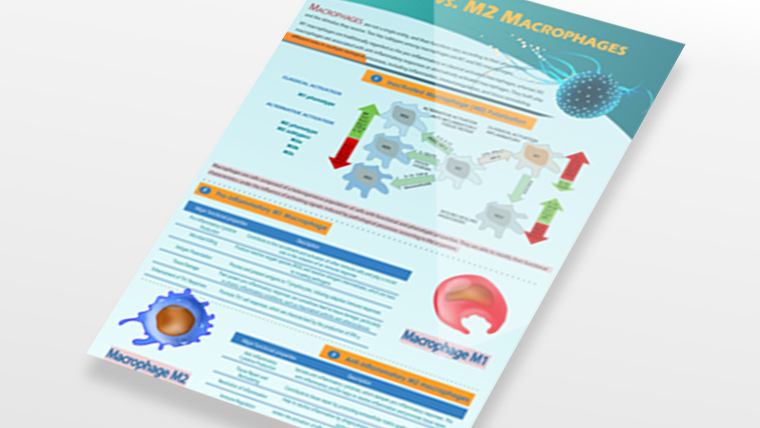
Historically, macrophage activation has often been described using the M1 and M2 model. M1-like macrophages are generally associated with inflammatory activation, strong cytokine production, antimicrobial responses, and increased antigen-presentation capacity. M2-like macrophages are commonly linked to tissue remodeling, wound healing, immune regulation, matrix deposition, and resolution-associated functions. However, this binary model is only a simplified experimental reference. In physiological and pathological environments, macrophages frequently display mixed phenotypes, partial activation states, stimulus-specific signatures, and tissue-adapted programs that do not fit neatly into a two-state classification.
 Fig. 1 Pathways for signaling macrophage polarization.1,2
For this reason, Creative Biolabs treats macrophage activation as a spectrum of programmable responses. We help clients define the activation state most relevant to their project, select suitable cellular models, establish stimulation conditions, determine time-course parameters, and connect molecular markers with functional outputs.
Our Macrophage Activation Service Platform
Creative Biolabs offers an integrated service platform covering the complete macrophage activation study workflow, from cell preparation and model design to functional analysis and data interpretation. Each project can be customized according to species, macrophage source, disease area, activation pathway, readout depth, throughput requirement, and translational objective.
Primary Macrophage Preparation and Activation
Creative Biolabs can support macrophage activation studies using human monocyte-derived macrophages, mouse bone marrow-derived macrophages, tissue-derived macrophages, or project-specific primary macrophage preparations.
Our team can assist with monocyte isolation, macrophage differentiation, culture optimization, baseline characterization, activation treatment, and downstream phenotyping. Depending on project needs, we can compare responses across donors, differentiation conditions, culture media, serum conditions, cytokine priming strategies, or stimulation schedules.
Macrophage-like cell lines can provide reproducible and scalable systems for screening, pathway interrogation, assay optimization, and early-stage discovery. Creative Biolabs can establish activation models using commonly applied macrophage-related cell lines and tailor them for inflammatory stimulation, regulatory activation, innate immune pathway activation, compound screening, reporter assay development, or mechanism-of-action studies.
Cell line-based systems are particularly suitable for projects requiring higher throughput, consistent baseline behavior, genetic manipulation, reporter construction, dose-response analysis, or repeated assay runs. We can help clients select appropriate models, define quality-control criteria, validate activation responsiveness, and bridge findings to primary macrophage systems when needed.
Classical Inflammatory Activation Models
Inflammatory macrophage activation remains central to studies of infection, autoimmune disease, inflammatory disorders, sepsis, vaccine adjuvanticity, biomaterial response, and drug safety. Creative Biolabs can establish classical activation conditions using interferon-associated priming, Toll-like receptor stimulation, inflammatory cytokine exposure, damage-associated molecular patterns, or disease-relevant inflammatory mediators.
Alternative, Reparative, and Regulatory Activation Models
Macrophages also participate in tissue remodeling, wound healing, immune resolution, matrix regulation, fibrosis, allergy, metabolic regulation, and tumor immune suppression. Creative Biolabs provides activation models that capture regulatory, reparative, pro-resolving, or alternatively activated macrophage features using cytokine-defined conditions, immune complex-associated stimulation, apoptotic cell exposure, lipid mediators, growth factors, stromal signals, or tissue-mimetic culture environments.
Pathway-Specific Macrophage Activation
Many research programs require targeted investigation of specific signaling pathways rather than broad phenotype categories. Creative Biolabs can design macrophage activation assays centered on defined receptors, signaling modules, transcription factors, or innate immune pathways. These may include Toll-like receptor pathways, interferon signaling, NF-κB activation, JAK-STAT signaling, inflammasome-associated responses, cGAS-STING-related signaling, C-type lectin receptor pathways, Fc receptor-mediated activation, complement-associated responses, hypoxia-related signaling, metabolic stress pathways, or nuclear receptor-mediated regulation.
Disease-Relevant Macrophage Activation Models
Macrophage activation differs substantially across disease contexts. A macrophage state relevant to a tumor microenvironment may differ from one found in autoimmune inflammation, fibrotic tissue, metabolic disease, neuroinflammation, chronic infection, cardiovascular lesions, or biomaterial-associated foreign body response. Creative Biolabs can help build disease-relevant activation models using conditioned media, co-culture systems, patient sample-derived stimuli, extracellular matrix components, cytokine combinations, hypoxia, lipid exposure, immune complexes, damage-associated signals, or disease-mimicking multi-factor stimulation.
Macrophage Activation Readout Capabilities
A well-designed macrophage activation study should connect phenotype, signaling, secretory behavior, metabolic status, and biological function. Creative Biolabs offers a broad portfolio of readout technologies that can be combined into fit-for-purpose assay panels.
|
Readout
|
Description
|
|
Surface Marker and Phenotype Analysis
|
Creative Biolabs can perform macrophage phenotype characterization using flow cytometry, immunofluorescence imaging, immunocytochemistry, and related marker-based methods. Marker panels can be customized for inflammatory, regulatory, reparative, antigen-presenting, tissue-remodeling, phagocytic, or disease-associated activation states.
Phenotype analysis may include surface receptors, costimulatory molecules, scavenger receptors, Fc receptors, antigen-presentation molecules, adhesion molecules, checkpoint-related molecules, chemokine receptors, tissue-remodeling markers, and project-specific biomarker candidates.
|
|
Cytokine, Chemokine, and Secretome Profiling
|
Creative Biolabs provides cytokine and chemokine profiling to evaluate the inflammatory, regulatory, recruitment, tissue-remodeling, angiogenic, or immune-modulatory characteristics of activated macrophages. Depending on project goals, we can perform targeted ELISA assays, multiplex cytokine panels, soluble receptor analysis, secretome profiling, or time-course secretion studies.
|
|
Gene Expression and Transcriptomic Analysis
|
Creative Biolabs can support targeted qPCR panels, custom gene-expression assays, bulk transcriptomic analysis, and bioinformatics-supported activation signature interpretation. Gene panels can include cytokines, chemokines, transcription factors, metabolic enzymes, antigen-presentation genes, inflammasome-associated genes, phagocytosis-related genes, matrix-remodeling factors, interferon-stimulated genes, lipid metabolism markers, and disease-specific signatures.
|
|
Functional Macrophage Assays
|
Our functional assay capabilities can include phagocytosis analysis, efferocytosis assays, antigen-presentation-related studies, immune-cell recruitment models, cytokine-driven functional assays, oxidative burst analysis, inflammasome-associated readouts, matrix remodeling assays, wound-healing-related models, cell migration assays, target-cell interaction assays, and macrophage-mediated immune modulation.
|
|
Imaging-Based Activation Analysis
|
Creative Biolabs offers imaging-based analysis using microscopy, immunofluorescence, high-content imaging, or customized image analysis workflows. Imaging can be used to quantify morphology, marker localization, nuclear translocation, phagocytosis, efferocytosis, lysosomal features, cytoskeletal organization, inflammasome-related structures, or macrophage interaction with target cells.
|
|
Macrophage Immunometabolism Analysis
|
Creative Biolabs can incorporate immunometabolism-related readouts into macrophage activation studies, including metabolic enzyme expression, mitochondrial status, redox-associated markers, nitric oxide-related analysis, lipid uptake, metabolic inhibitor studies, and pathway-oriented assays.
|
Representative Service Modules
Creative Biolabs can configure macrophage activation projects using one or more of the following modules:
-
Activation Model Development - This module focuses on building a reliable macrophage activation system tailored to your research objective. It may include cell source selection, differentiation optimization, stimulus selection, dose and time optimization, control design, and baseline marker validation.
-
Activation Phenotype Mapping - This module compares macrophage activation states across stimuli, donors, disease-mimicking conditions, therapeutic treatments, or experimental groups. It can include flow cytometry, imaging, qPCR, cytokine profiling, and statistical comparison of activation signatures.
-
Therapeutic Candidate Screening - This module evaluates how candidate molecules or formulations modulate macrophage activation. We can support dose-response studies, multi-candidate ranking, inflammatory suppression assays, regulatory activation assays, toxicity assessment, cytokine profiling, and functional validation.
-
Disease-Mimicking Activation Studies - This module develops macrophage activation models using disease-relevant environmental cues, such as tumor-conditioned media, inflammatory cytokine cocktails, hypoxia, lipid exposure, immune complexes, extracellular matrix components, or patient sample-derived stimuli.
-
Pathway and Mechanism Analysis - This module investigates signaling mechanisms underlying macrophage activation or reprogramming. It can include pathway-specific stimulation, inhibitor studies, receptor blocking, gene-expression profiling, phosphorylation analysis, transcription factor activation, and rescue experiments.
-
Macrophage Co-Culture Activation Systems - This module evaluates how macrophage activation is shaped by interactions with tumor cells, T cells, fibroblasts, epithelial cells, endothelial cells, stromal cells, adipocytes, or other cell types. Co-culture systems may be direct, indirect, transwell-based, conditioned-media-based, or customized according to the biological question.
-
Translational Biomarker Discovery - This module identifies macrophage activation markers that may support patient stratification, pharmacodynamic assessment, disease monitoring, or therapeutic response analysis. It can combine secreted factors, surface markers, gene signatures, and functional readouts.
Advantages of Choosing Creative Biolabs
-
Deep Experience in Macrophage Biology
Creative Biolabs has extensive experience supporting macrophage-related research and therapeutic development. Our team understands that macrophage activation is context-specific and must be interpreted through both phenotype and function.
-
Flexible and Customizable Assay Design
Each project can be customized according to the macrophage source, stimulation strategy, disease model, therapeutic modality, assay format, throughput level, and translational objective.
-
Multi-Layered Readout Integration
Our service platform can integrate surface markers, cytokines, gene expression, signaling events, imaging features, metabolic status, and functional assays. This helps clients obtain a more complete view of macrophage activation.
-
Support for Discovery and Preclinical Programs
Whether you are conducting early hypothesis testing, assay development, candidate screening, target validation, mechanism-of-action research, or translational biomarker studies, Creative Biolabs can align the experimental plan with your development stage.
-
Compatibility with Diverse Therapeutic Modalities
Our macrophage activation service can support small molecules, antibodies, cytokines, fusion proteins, peptides, nucleic acid therapeutics, gene-editing tools, nanoparticles, extracellular vesicles, biomaterials, vaccines, adjuvants, and cell-based products.
Related Products
|
Cat.No
|
Product Name
|
Product Type
|
|
MTS-1022-JF1
|
B129 Mouse Bone Marrow Monocytes, 1 x 10^7 cells
|
Mouse Monocytes
|
|
MTS-0922-JF99
|
Human M0 Macrophages, 1.5 x 10^6
|
Human M0 Macrophages
|
|
MTS-0922-JF52
|
C57/129 Mouse Macrophages, Bone Marrow
|
C57/129 Mouse Macrophages
|
|
MTS-1022-JF6
|
Human Cord Blood CD14+ Monocytes, Positive selected, 1 vial
|
Human Monocytes
|
|
MTS-0922-JF34
|
CD1 Mouse Macrophages
|
CD1 Mouse Macrophages
|
|
MTS-1123-HM6
|
Macrophage Colony Stimulating Factor (MCSF) ELISA Kit, Colorimetric
|
Detection Kit
|
|
MTS-1123-HM15
|
Macrophage Chemokine Ligand 19 (CCL19) ELISA Kit, qPCR
|
Detection Kit
|
|
MTS-1123-HM17
|
Macrophage Chemokine Ligand 4 (CCL4) ELISA Kit, Colorimetric
|
Detection Kit
|
|
MTS-1123-HM49
|
Macrophage Migration Inhibitory Factor (MIF) ELISA Kit, Colorimetric
|
Detection Kit
|
|
MTS-1123-HM42
|
Macrophage Receptor with Collagenous Structure ELISA Kit, Colorimetric
|
Detection Kit
|
Scientific Resources
Q & A
Q: What macrophage sources can be used for activation studies?
A: Creative Biolabs can support activation studies using human monocyte-derived macrophages, mouse macrophage systems, tissue-derived macrophages, and macrophage-like cell lines. The optimal model depends on the research question, throughput requirement, translational relevance, and desired readouts.
Q: Can you design activation models beyond M1 and M2 macrophages?
A: Yes. While M1-like and M2-like activation models can be included as reference systems, we can design more refined models based on disease context, cytokine combinations, innate immune pathway activation, tumor-derived signals, tissue-repair cues, metabolic stress, or therapeutic modulation.
Q: Can macrophage activation be evaluated in co-culture systems?
A: Yes. Creative Biolabs can establish macrophage co-culture models with tumor cells, immune cells, fibroblasts, epithelial cells, endothelial cells, stromal cells, or other project-relevant cell types. These models help capture cell-cell communication and microenvironment-driven activation.
Q: Can you screen compounds that modulate macrophage activation?
A: Yes. We can design screening assays to evaluate whether candidate compounds suppress inflammatory activation, promote regulatory activation, enhance functional macrophage responses, alter cytokine production, affect viability, or shift activation-associated gene expression.
Q: Can you provide customized reports?
A: Yes. Reports can include experimental design, methods summary, quality-control results, marker expression data, cytokine profiles, representative images, statistical analysis, integrated interpretation, and recommended follow-up experiments.
Q: Can you support mechanism-of-action studies?
A: Yes. Mechanism-oriented studies can include pathway-specific stimulation, inhibitor or agonist testing, receptor-blocking experiments, signaling analysis, transcriptomic profiling, functional rescue studies, and comparison of activation signatures under different treatment conditions.
Macrophage activation is a central process in immunity, inflammation, tissue repair, disease progression, and therapeutic response. However, its complexity requires carefully designed models and multidimensional analysis. Creative Biolabs provides customized macrophage activation services to help clients build reliable assay systems, decode macrophage behavior, evaluate therapeutic candidates, and generate actionable biological insights.
Please contact us to discuss your project goals, preferred macrophage model, activation conditions, and required readouts. Our scientific team will work with you to develop a tailored solution that fits your research and development needs.
References
-
Chen, Shanze, et al. "Macrophages in immunoregulation and therapeutics." Signal transduction and targeted therapy 8.1 (2023): 207. https://doi.org/10.1038/s41392-023-01452-1
-
Distributed under Open Access license CC BY 4.0, without modification.